When a storm knocks out water and sewer service, Durham Porta Pros can get portable toilets and handwashing stations on site within hours, not days. We stage standard units, holding tanks and generators for fast turnaround, and a single delivery run can put 4 to 6 units across a shelter, a staging area and a distribution point in one trip.
Speed depends on road access and how many households need service, but our crews prioritize emergency requests ahead of routine porta potty rental bookings. A standard unit needs about 60 to 70 gallons of holding capacity, and most disaster deployments call for several units clustered near shelter entrances rather than one unit per building. If Durham activates a shelter at a school or community center, we can usually deliver the first wave of portable toilet rental units and at least one ADA accessible porta potty the same day, weather and roads permitting. ADA Standards section 213.2 requires that where single-user units are clustered, at least 5 percent must be accessible, and never fewer than one, so shelter sites need that unit counted in from the start, not added later. We also bring handwashing station rental units at the same time, since 29 CFR 1910.141(d)(2) requires soap and towels or a hand-drying device at washing stations, not just hand sanitizer. For sites without power, we pair units with a light tower rental so shelter grounds stay lit and walkable after dark. Crews from our Durham yard can also reach Gorman, 8.3 miles northeast, or Chapel Hill, 9.6 miles southwest, on the same run if a regional shelter network spans multiple towns.
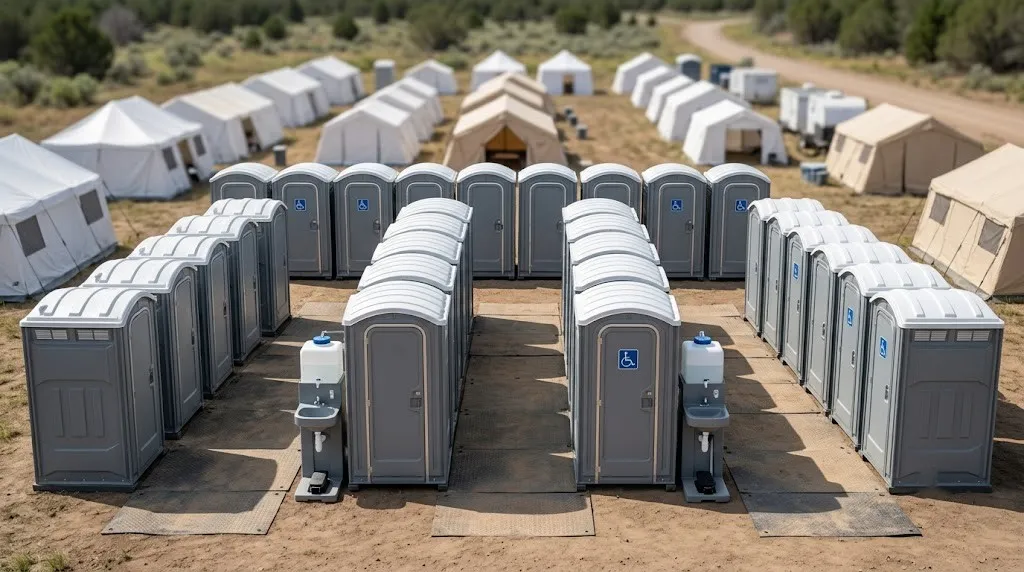
A real disaster response needs toilets, handwashing, water storage backup and sometimes temporary holding tanks for septic systems knocked offline by flooding. If a home's septic system fails during flooding, a holding tank rental can bridge the gap until the tank is pumped and inspected, and residential systems are typically pumped every 3 to 5 years under normal conditions, so storm damage often accelerates that schedule. Our septic pumping service trucks can also handle a compromised system directly, and if a business kitchen is affected, grease trap pumping keeps that separate problem from backing up into the sanitary line. OSHA 1926.51(a)(1) requires an adequate supply of potable water at all places of employment, which matters for relief workers staged on site for long shifts, not just residents. We also stock portable sink rental units for feeding stations and temporary fence rental to secure a staging yard or keep foot traffic away from generators and cabling. For crews working outdoors during cleanup, OSHA 1926.51(c) sets toilet ratios by headcount: one facility for 20 workers or fewer, and additional seats and urinals as crews scale past 20 and 200. That ratio applies to disaster cleanup crews the same as any other construction site, so a 40-person debris crew needs more than a single unit parked at the fence line. If storm debris removal is part of the response, a roll-off dumpster rental or two speeds up cleanup, and what cannot go in a dumpster is worth checking before hazardous storm debris gets tossed in with everything else.
Pricing runs close to standard weekend and short-term rates, since disaster deployments are usually urgent and short. Expect delivery fees on the higher end of the normal range given the rushed timeline.
| Item | Typical Cost Band |
|---|---|
| Standard unit, weekend | $125 to $400 |
| Standard unit, day rate | $100 to $350 |
| Delivery fee, weekend | $125 to $540 |
| Septic call, day rate | $150 to $300 |
| Service fee, weekend | $400 to $1,200 |
Longer deployments shift to weekly or monthly pricing once the emergency phase passes and cleanup becomes routine work; see porta potty rental cost and monthly porta potty rental for how that pricing changes over time. If your situation stretches past the first week, a temporary power pole or a mobile office trailer rental can support a longer command post near the affected area. Storage needs also shift fast during recovery, and a storage container rental gives displaced households or contractors a secure place for salvaged belongings and tools while repairs continue.
It depends on headcount and hours of operation, but OSHA 1926.51(c) is the baseline ratio most planners use: one unit per 20 people, scaling up from there. Shelters running 24 hours need more units than a daytime-only site. See how many porta potties do I need for a fuller breakdown.
We deliver as conditions allow, but flooded roads and downed lines can delay a truck safely reaching a site. We coordinate delivery windows around road access rather than promise a fixed hour during active weather.
Yes. ADA Standards section 213.2 requires at least one accessible unit in any cluster, and our ADA accessible porta potty units meet the clear width and turning space standards shelters need to stay compliant.
Flooding can overload a tank or block the drain field, and a compromised system sometimes needs a temporary holding tank while it's inspected. Our septic tank warning signs page covers what to watch for after water recedes.
Yes. Our service areas page covers towns including Morrisville, 13.5 miles south, and Carrboro, 13.3 miles west, both reachable from our Durham base during a regional response.
Yes. Durham Porta Pros delivers disaster relief sanitation across Durham and the surrounding metro, with same-day and next-day drop-off available on most orders.
Pricing depends on the unit and how long you need it. See our cost breakdown and request a free quote for an exact figure.
Standard rentals include scheduled service — a pump-out, a clean, a restock and fresh deodorizer. Busy or hot-weather sites can be serviced more often.
Call now or request a free quote — clean units, on-time delivery, transparent pricing.